Breaking Through Obstruction, Precise Targeting! Innovative Therapy Rewrites the Pattern of Cardiovascular Disease Diagnosis and Treatment

"Thanks to the expert team at Shulan (Hangzhou) Hospital and that 'life-saving drug, my father can now walk slowly on his own and no longer has to lie in bed all day!" Talking about her father Mr. Jiang’s treatment experience over the past year, his daughter’s tone was full of gratitude.
The 68-year-old Mr. Jiang was once in a life-or-death predicament due to hypertrophic obstructive cardiomyopathy (HOCM), but now he has been reborn through the joint efforts of innovative drugs and multidisciplinary diagnosis and treatment (MDT). This is not only the luck of a family but also reflects the breakthrough progress of the Department of Cardiology at Shulan (Hangzhou) Hospital in the field of cardiovascular disease treatment.
01 Innovative Drugs "Break Obstruction"
Severely Ill Patients Regain Vitality
"At that time, his blood pressure was only in the 80s, and he didn’t even have the strength to speak while lying in bed. The local hospital said there was nothing they could do, so we came here with the last glimmer of hope." Recalling the scene of bringing her father to Shulan Hospital in October last year, Ms. Jiang still felt frightened.
Mr. Jiang suffered from hypertrophic obstructive cardiomyopathy, a hereditary heart disease in which myocardial hypertrophy blocks the heart’s blood supply channels, preventing blood from being normally transported to the whole body. More than 10 years ago, he began to experience symptoms of heart failure, and 6 years ago, he even had a CRT three-chamber pacemaker implanted to relieve his condition. In the first half of last year, his condition suddenly deteriorated, complicated by gastrointestinal bleeding, putting his life at risk.

The cardiology team at Shulan (Hangzhou) Hospital conducted a detailed examination for Mr. Jiang, and the results were worrying: the normal myocardial thickness should be less than 11 millimeters, but his myocardial thickness reached 26 millimeters—more than twice the normal level; the pressure difference in the left ventricular outflow tract (LVOT) of the heart was as high as 112 mmHg, while healthy people have no pressure difference here. Such a large pressure difference means that his heart’s blood supply channels were severely blocked, making it naturally difficult to maintain peripheral blood pressure.
"We have used conventional drugs before, but his blood pressure was too low to increase the dosage, so the effect was minimal." Chief Physician Ma Liping from the Department of Cardiology introduced that initially, they considered relieving the obstruction through chemical ablation, but after angiography, it was found that Mr. Jiang had no suitable target blood vessels, so this path was also blocked.
Just as the treatment reached a stalemate, good news came: a new targeted drug specifically for hypertrophic obstructive cardiomyopathy was about to enter the Hangzhou market, expected to be available in a month. "This was the only hope at that time. After communicating with the family, we decided to try this 'life-saving drug' as soon as it was launched."

At the end of October last year, the "life-saving drug" finally arrived. Ma Liping and the team doctors were extremely cautious and started administering the drug from the minimum effective dose. Unexpectedly, only one month later, Mr. Jiang’s re-examination results excited everyone: the left ventricular outflow tract pressure difference dropped from 112 mmHg to more than 60 mmHg, a decrease of nearly 50%; the peripheral blood pressure also recovered to 112 mmHg, reaching the normal level. "My father said he 'felt strong again' and his spirits were obviously different," Ms. Jiang said.
Since then, Mr. Jiang has returned to the hospital for re-examination every 4 weeks, and indicators from examinations such as echocardiography and blood tests have continued to improve. When he returned to the hospital for a check-up this year, his interventricular septum thickness had significantly decreased, and key functional indicators such as the heart’s ejection fraction remained stable. Finally, the "obstruction problem" that once left doctors helpless was successfully solved.
02 Multidisciplinary Collaboration "Stops Severe Bleeding"
Escorting the Treatment
However, Mr. Jiang’s treatment path was not smooth. He had suffered from schistosomal liver disease for many years, which had developed into cirrhosis. Esophageal and gastric varices were already prone to bleeding, and after the targeted drug raised his blood pressure, the vascular pressure increased, and the risk of bleeding also rose accordingly.
In April this year, Mr. Jiang experienced gastrointestinal bleeding for the first time. The doctors immediately adopted conservative treatment and temporarily controlled the condition. But in July, he suddenly suffered from hemorrhagic shock, with a blood loss of more than 800 milliliters—his condition was more critical than last time.
The Department of Cardiology immediately organized an MDT consultation with teams from the Department of Infectious Diseases, Interventional Vascular Surgery, Gastroenterology, Anesthesiology, and other disciplines. Considering that Mr. Jiang’s cardiac function was weak and he could not tolerate complex surgeries before, the team finally decided to perform an emergency TS shunt surgery—a procedure that reduces portal vein pressure through shunting, which can quickly control bleeding from esophageal and gastric varices.
"The surgical risk was very high. Because his heart had just improved and he was in a state of shock, any problem in any link could be life-threatening." The cardiology and interventional vascular surgery teams closely monitored Mr. Jiang’s heart rate, blood pressure, and other indicators throughout the process. The surgery lasted more than 2 hours and finally achieved successful hemostasis.
After the operation, the Department of Infectious Diseases team formulated a new anti-infection plan for Mr. Jiang’s cirrhosis and low immunity, avoiding complications such as hepatic encephalopathy or cardiac insufficiency after the operation. After more than a month of rehabilitation, Mr. Jiang’s gastrointestinal bleeding was completely controlled and never recurred.
"If we hadn’t used the targeted drug to reduce the pressure difference in the heart’s outflow tract and improve cardiac function earlier, he could not have endured this surgery at all." Chief Physician Ma Liping said that this is the advantage of MDT: not only solving the core cardiac problem but also taking into account the patient’s underlying diseases to "escort" every step of the treatment.
Today, Mr. Jiang can live a normal life. In a WeChat message to Ma Liping, his daughter Ms. Jiang said: "Although my father has many underlying diseases and has suffered a lot, we are very lucky to have encountered such a good treatment method."
03 Cardiovascular Diseases Enter the "Targeted Era"
Precision Treatment Becomes a New Trend
Mr. Jiang’s case is a microcosm of the Department of Cardiology at Shulan Hospital exploring precision treatment for cardiovascular diseases. In recent years, with the development of medical technology, the treatment of cardiovascular diseases has evolved from traditional "symptomatic treatment" to the "targeted treatment era," bringing new hope to more patients.
"In the past, the treatment of hypertrophic cardiomyopathy mainly relied on drugs such as beta-blockers to relieve symptoms, or surgical resection of hypertrophic myocardium. However, the effect of drugs was limited, and the surgical risk was high." Ma Liping said that the breakthrough of targeted treatment lies in finding the "genetic target" of the disease—for example, hypertrophic cardiomyopathy is related to mutations in sarcomere protein genes. New targeted drugs can directly act on these mutant proteins, regulate myocardial contractile function, and fundamentally reduce myocardial hypertrophy and obstruction.
This precision treatment is not only effective but also reduces side effects. Taking hyperlipidemia as an example, traditional statin drugs may cause liver damage and muscle weakness, and some patients (especially those with liver diseases) cannot tolerate them. New targeted lipid-lowering drugs can accurately reduce "bad cholesterol" (low-density lipoprotein cholesterol) by regulating specific genes or RNA. They not only have a stronger lipid-lowering effect than statins but also avoid impacts on the liver and muscles.
"Our hospital has many patients with liver diseases. Many of them could not control their blood lipids well because they could not tolerate statins. After switching to targeted drugs, their blood lipids quickly reached the standard without any adverse reactions." Ma Liping introduced that the hospital has formulated targeted treatment plans for dozens of such patients so far, and the results are very satisfactory.
However, it is worth noting that not all patients are suitable for targeted treatment; genetic testing is required first. The premise of precision treatment is "precision diagnosis"—clarifying the cause through blood tests, gene sequencing, and other means before formulating a personalized treatment plan.
In terms of treatment technology, targeted therapy for cardiovascular diseases is constantly upgrading. Currently, targeted drugs at the "protein level" are widely used clinically, and some drugs need to be injected every two weeks; targeted therapy at the "RNA level" has entered the clinical application stage, and patients only need one injection every six months to maintain efficacy; more cutting-edge "gene-level" treatment is undergoing clinical research, and it is expected to achieve "one treatment, long-term effect" in the future.
"Foreign studies have shown that gene therapy can modify specific genes, allowing patients to avoid taking drugs for two or three years without affecting genetic inheritance." Chief Physician Ma Liping revealed that Shulan Hospital is also participating in relevant clinical research. It is expected that in the next few years, gene therapy may be more widely used in diseases such as familial hyperlipidemia and hereditary cardiomyopathy.
According to statistics, the incidence of hypertrophic cardiomyopathy in China is about 1/200 to 1/500. However, due to the fact that some patients have no symptoms or atypical symptoms, the diagnosis rate is relatively low. "The emergence of targeted therapy not only provides a better choice for diagnosed patients but also gives us the confidence to discover more potential patients and intervene in treatment as early as possible." Chief Physician Ma Liping said.

04 World Heart Day Free Clinic on September 29
Free Electrocardiogram and Carotid Artery Ultrasound Examinations
Cardiovascular diseases have become the "number one killer" threatening national health, and hyperlipidemia, hypertension, and other conditions are important risk factors for coronary heart disease, myocardial infarction, and heart failure. To improve public awareness of cardiovascular diseases and popularize scientific prevention and treatment methods, on the occasion of the 26th "World Heart Day" on September 29, Shulan (Hangzhou) Hospital will hold a free clinic and health education activity for cardiovascular diseases.
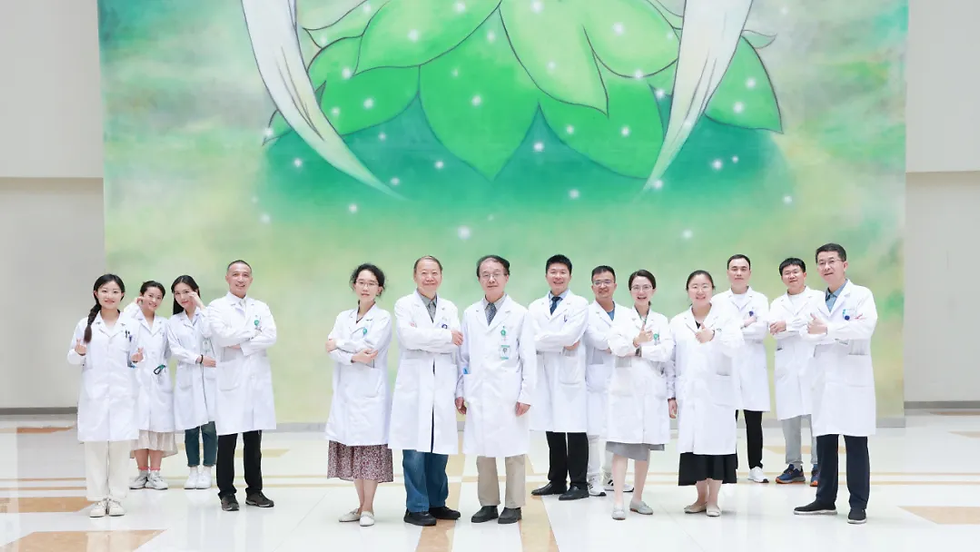
This morning, an expert team including Chief Physicians Qu Baiming, Ma Liping, Tao Qianmin, Associate Chief Physicians Li Ketao, Yan Laixing from the Heart Center will be in attendance, covering multiple fields such as coronary heart disease, cardiomyopathy, hyperlipidemia, and hypertension. They will explain cardiovascular disease prevention knowledge on-site, including how to reduce the risk of cardiovascular diseases through lifestyle interventions such as dietary adjustments, exercise, smoking cessation, and alcohol restriction.
During the activity, citizens can enjoy three major benefits: first, free expert registration fees to consult face-to-face with cardiology experts directly; second, free electrocardiogram examinations to initially screen for arrhythmia, myocardial ischemia, and other problems; third, free carotid artery ultrasound examinations to evaluate vascular plaques and stenosis, and detect atherosclerosis risks in advance.
"Many people don’t know that carotid artery ultrasound is a 'window' for screening cardiovascular diseases. If there are plaques in the carotid arteries, it means there may be problems with blood vessels throughout the body, which require timely intervention." Ma Liping reminded that the following groups are especially recommended to participate in the free clinic: those with underlying diseases such as hypertension, hyperlipidemia, and diabetes; those with a family history of coronary heart disease, myocardial infarction, or heart failure; those who often experience symptoms such as chest tightness, chest pain, dizziness, and fatigue; and people over 40 years old.
"We hope that through this free clinic, more people will pay attention to heart health, understand the latest treatment technologies, and achieve 'early detection, early diagnosis, and early treatment'." Ma Liping said that in the future, the Department of Cardiology at the hospital will continue to deepen its efforts in fields such as targeted therapy and MDT, providing higher-quality and more precise medical services for more cardiovascular disease patients and safeguarding the public’s "heart health."
Citizens who want to participate in the free clinic can make an appointment in advance through the hospital’s official channel to arrange the examination process reasonably and reduce waiting time.


Comments