Eye Exams & Dental Checkups in China for Foreign Travelers 2026
The Short Answer: Clear Vision and a Healthy Smile Are Worth the Trip
Two of the most common healthcare needs that international travelers overlook — until something goes wrong — are eye health and dental health. Both are highly treatable, both are significantly cheaper in China than in most Western countries, and both are available at high standards in Chinese premium hospitals and specialized clinics.
This article covers what's available for eye care (comprehensive eye exams, cataract surgery, LASIK and refractive surgery) and dental care (comprehensive dental checkups, cleaning, restorative work, and cosmetic dentistry) in China in 2026 — including what to expect, what it costs, and which hospitals and clinics offer these services.
Part 1: Eye Exams and Eye Surgery in China
Why Eye Health Screening Matters
Eye health is often neglected in general health checkups — but it's one of the most valuable screenings you can do. Common conditions like glaucoma, cataracts, and age-related macular degeneration (AMD) are largely silent until significant vision loss has occurred. By the time symptoms appear, irreversible damage may have happened.
A comprehensive eye exam — including visual acuity testing, intraocular pressure measurement, retinal examination, and lens assessment — can detect all of these conditions at their earliest, most treatable stages.

What a Comprehensive Eye Exam Includes
Visual acuity testing — The standard letter chart test that determines how well you see at distance and near. The starting point for any eye assessment.
Refraction assessment — Determines whether you have myopia (nearsightedness), hyperopia (farsightedness), astigmatism, or presbyopia (age-related difficulty focusing on near objects). Done with a phoropter or automated refractometer.
Intraocular pressure (IOP) measurement — Measures the pressure inside the eye. Elevated IOP is a key risk factor for glaucoma — a condition that causes irreversible vision loss if untreated. Quick, painless, and essential.
Slit lamp examination — A microscope that allows detailed examination of the front structures of the eye (cornea, iris, lens) and the external eye. Detects cataracts, corneal abnormalities, and surface conditions.
Retinal examination (fundoscopy) — Allows examination of the retina (back of the eye), optic nerve, and blood vessels. Detects diabetic retinopathy, macular degeneration, retinal detachments, and signs of hypertension.
Optical coherence tomography (OCT) — Advanced imaging of the retina and optic nerve. Detects early signs of glaucoma, macular degeneration, and diabetic eye disease. Non-invasive and highly informative.
Cataract Surgery in China
Cataracts — clouding of the eye's natural lens — are the leading cause of blindness worldwide, and one of the most common conditions requiring surgery in adults over 60. The good news: cataract surgery is one of the most successful and cost-effective surgical procedures in all of medicine.
What cataract surgery involves: The clouded natural lens is removed and replaced with an artificial intraocular lens (IOL). The procedure takes 15–30 minutes per eye, is performed under local anesthesia, and has a recovery time of a few days to a few weeks.
LASIK and Refractive Surgery in China
For patients with myopia, hyperopia, or astigmatism who want to reduce or eliminate their dependence on glasses or contact lenses, LASIK and related refractive procedures are available at top eye hospitals in major Chinese cities.
LASIK (Laser-Assisted In Situ Keratomileusis) — The most common refractive procedure. A laser reshapes the cornea to correct refractive errors. Quick procedure (10–15 minutes per eye), rapid visual recovery, high success rate.
SMILE (Small Incision Lenticule Extraction) — A newer, minimally invasive laser procedure. Less corneal tissue disruption than LASIK. Particularly good for higher myopia.
LASEK / PRK (Photorefractive Keratectomy) — Surface ablation procedures. Appropriate for patients with thin corneas or certain corneal shapes that rule out LASIK.
Requirements for refractive surgery: Candidates must be over 18, have stable refractive error (no prescription change for at least one year), and have healthy corneas. A comprehensive pre-operative assessment — including corneal mapping (topography), thickness measurement, and pupil size — is required before any procedure.
Procedure | China (Premium Eye Hospital, per eye, USD) | United States | Singapore |
LASIK (standard) | USD 500–1,000 | USD 2,000–3,000 | USD 1,500–2,500 |
LASIK (custom/wavefront) | USD 800–1,500 | USD 2,500–4,000 | USD 2,000–3,500 |
SMILE | USD 1,000–1,800 | USD 2,500–4,000 | USD 2,000–3,500 |
Requirements for refractive surgery: Candidates must be over 18, have stable refractive error (no prescription change for at least one year), and have healthy corneas. A comprehensive pre-operative assessment — including corneal mapping (topography), thickness measurement, and pupil size — is required before any procedure.
Eye Surgery in China: Which Hospitals?
Beijing Tongren Hospital — One of China's premier eye hospitals, affiliated with Capital Medical University. Strong in cataract surgery, retinal disease, and glaucoma. Has dedicated international patient services.
Beijing Raffles Hospital — Academic ophthalmology with subspecialty expertise across all areas.
Shanghai Eye Hospital and Shanghai Eye Disease Prevention & Treatment Center — Well-established eye hospitals with strong international patient experience.
Shanghai Jiahui International Hospital Eye Center — English-language eye care in a private international hospital setting.
Shenzhen and Guangzhou — Premium private hospitals with ophthalmology departments and eye surgery capabilities. Practical for medical tourists combining eye care with general health checkups.
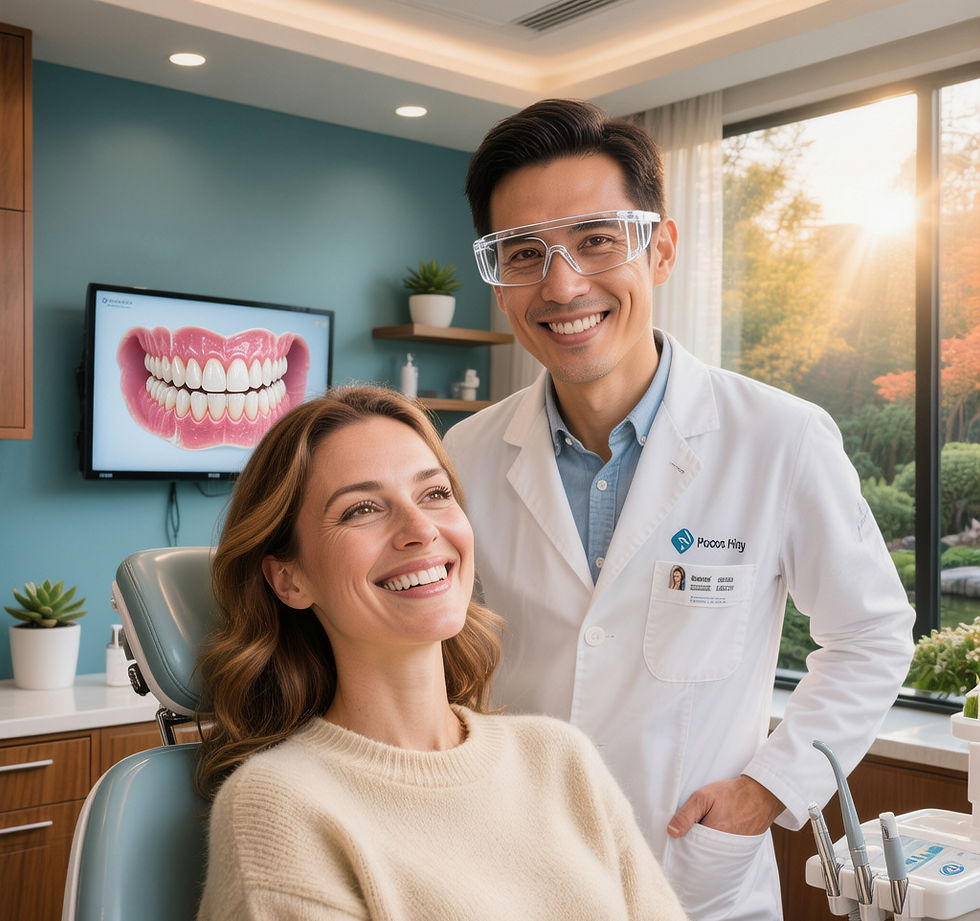
Part 2: Dental Checkups and Dental Care in China
Why Dental Health Matters More Than Most People Think
Dental health is not just about your teeth. The health of your mouth is directly linked to your overall health:
Cardiovascular disease — Chronic gum inflammation (periodontitis) is associated with increased risk of heart attack and stroke.
Diabetes — People with diabetes are more susceptible to gum disease; gum disease makes diabetes harder to control.
Respiratory infections — Oral bacteria can be aspirated into the lungs, causing pneumonia and other respiratory infections.
Pregnancy outcomes — Gum disease is associated with premature birth and low birth weight.
A comprehensive dental checkup — including examination, cleaning, and X-rays — is one of the most valuable preventive health investments you can make. And in China, it costs a fraction of what it does in most Western countries.
What a Comprehensive Dental Checkup Includes
Clinical examination — Visual examination of all teeth, gums, tongue, and oral soft tissues. Checks for cavities, cracks, gum recession, oral cancer signs, and bite alignment.
Periodontal assessment — Measurement of gum pocket depth (using a periodontal probe) to assess gum health and detect periodontitis. Bleeding on probing, gum recession, and pocket depth are all recorded.
Dental X-rays:
Bitewing X-rays — Detect cavities between teeth and under existing fillings. Usually taken every 12–24 months.
Panoramic X-ray (OPG) — Full-mouth overview showing all teeth, jawbone, sinuses, and temporomandibular joints. Standard in comprehensive exams.
Periapical X-rays — Detailed images of individual tooth roots. Used when investigating specific problems.
Professional dental cleaning (scaling and polishing) — Removal of plaque, calculus (tartar), and surface stains by a dental hygienist. Recommended every 6 months for maintaining gum health.
Oral hygiene consultation — Personalized advice on brushing technique, flossing, interproximal cleaning, and any other tools relevant to your specific situation.
Which Clinics in China Handle International Dental Patients?
Beijing:
Beijing United Family Hospital Dental Center — Full-service dental clinic within a premium international hospital. English-speaking dentists, international standards.
Raffles Hospital Beijing — Well-regarded international dental clinic with English service.
Shanghai:
Jiahui International Hospital Dental Center — Full dental services in a private international hospital.
Shanghai Parkway Hospital Dental — Established dental clinic with international patient experience.
Shanghai Dental (Shanghai Stomatological Hospital) — Major public dental hospital with VIP international department.
Shenzhen and Guangzhou:
United Family Healthcare clinics in Shenzhen and Guangzhou have dental departments.
Distinct HealthCare in Shenzhen and Guangzhou offers quality dental care with English-speaking dentists.
Xi'an:
Xi'an International Medical Center has a dental department for comprehensive dental care.
Important Things to Know
Dental and eye care often aren't included in health checkup packages. Comprehensive health checkup packages focus on systemic health — blood tests, imaging, organ assessment. Dental cleaning and eye exams are usually separate services, available at the same hospital or clinic, but requiring a separate booking. If you want both a health checkup and a dental cleaning or eye exam, mention this when booking — many hospitals can arrange both on the same day.
UFH packages sometimes include complimentary dental cleaning. United Family Healthcare's Premium Women's package notably includes a complimentary dental cleaning as part of the health checkup. This is worth checking when comparing packages.
For dental implants: plan ahead. Dental implant treatment typically requires multiple visits over several months — initial assessment and planning, implant placement, healing period (3–6 months for osseointegration), and crown placement. If you're considering dental implants in China, plan a trip of at least 1–2 weeks initially, with a return visit 3–6 months later for the final crown. Some clinics offer immediate-loading implants that reduce the number of visits.
Bring dental records if you have them. If you have prior dental X-rays, treatment records, or a panoramic X-ray, bring copies. They help your Chinese dentist understand your dental history and avoid unnecessary repeat imaging.
Eye surgery requires a consultation first. Before any refractive surgery (LASIK, SMILE), a comprehensive pre-operative assessment is mandatory. Not everyone is a candidate — your cornea must be thick enough, your prescription must be stable, and your eye health must be otherwise normal. The consultation determines eligibility.
Travel insurance for dental and eye care. Most travel insurance policies cover emergency dental treatment but not elective or preventive dental care. International health insurance policies may cover preventive dental and eye exams — check with your insurer. MedTourChina can provide documentation for reimbursement claims.
The Bottom Line
Eye health and dental health are two areas where preventive care pays dividends far beyond its cost — and where China's combination of high clinical standards and competitive pricing makes world-class care genuinely accessible to international patients.
A dental cleaning that costs USD 200 in the United States is USD 40 in China. Cataract surgery that costs USD 6,000 in the US is USD 2,500 in China. A comprehensive eye exam that costs USD 200 in the US is USD 60 in China. These aren't compromises — they're the same equipment, the same trained specialists, and the same quality materials, at a fraction of the price.
Whether you're combining a dental cleaning with a general health checkup, getting cataract surgery while visiting China, or making a dedicated dental tourism trip for implants, the care is there, the price is right, and the results are reliable.
Your eyes and your teeth are worth the trip.
Planning eye or dental care in China?MedTourChina arranges comprehensive eye exams, eye surgery, dental checkups, and dental treatments at top hospitals and clinics in Beijing, Shanghai, Shenzhen, Guangzhou, and Xi'an. Tell us what you need — we'll connect you to the right clinic and handle the logistics.
📞 +86 177 4202 6990 (WeChat / WhatsApp)
This article is for informational purposes and does not constitute medical advice. Please consult your physician or dentist about your individual eye and dental health needs.


Comments