Warning: These Habits May Stunt Growth & Ruin Kids’ Posture

Slumping while scrolling phones, slouching over homework, crossing legs while watching shows — these seemingly relaxing postures are silently damaging teenagers’ spines.
Adolescence (10–18 years old) is the golden period for spinal development, yet 1.5%–3% of teens develop Adolescent Idiopathic Scoliosis (AIS), a 3D spinal deformity. It causes uneven shoulder height and tilted waistlines, making kids look shorter than peers. Long-term consequences include persistent back pain and low self-esteem.

How Spines Gradually Curve
A healthy spine is straight from the front and forms gentle physiological curves from the side, acting like a shock-absorbing spring. But adolescent bones are not fully mature. Chronic poor posture twists the spine into a C or S shape over time.
Early signs are subtle: uneven facial alignment in photos, one shoulder slipping down, or a raised bump on one side when bending forward. Girls aged 10–15 face higher risk, and a family history further raises susceptibility.
Common harmful habits:
Hunching over screens puts watermelon-level pressure on the cervical spine;
Slanted seating creates unbalanced spinal muscle tension;
Prolonged inactivity weakens core muscles that support the spine.
More Than an Unsightly Appearance
Untreated mild scoliosis worsens as children grow. Moderate curves restrict spinal mobility and trigger back soreness with minor exercise. Severe scoliosis compresses the chest cavity and impairs cardiopulmonary function.
Beyond physical harm, spinal deformities take a heavy mental toll. Around 32% of patients suffer anxiety, and 18% face depression risks, which worsen chronic pain into adulthood and lower long-term quality of life.

How to Protect Straight Spines
Scoliosis is highly manageable with early detection and intervention. Parents can complete a 5-minute home screening:
Ask the child to stand naturally and check for asymmetrical shoulders, shoulder blades and waistlines;
Have the child stand with feet together, knees straight and bend forward 90 degrees. A raised bump on one side requires immediate medical consultation.
Hospitals combine visual inspection, Adam’s Forward Bend Test and trunk rotation angle measurement for screening, with a positive predictive value up to 81% — more accurate than single tests.
Targeted treatments for different severities:
Mild scoliosis (Cobb angle 10°–20°): Corrective gymnastics plus swimming, skipping rope to strengthen core muscles;
Mild to moderate scoliosis (Cobb angle <45°): Scoliosis-Specific Exercise (PSSE) 3–5 times weekly for 60–90 mins, reducing curves by 5°–8° after 16 weeks;
Curves over 20° in skeletally immature kids: Rigid braces worn ≥18 hours daily, cutting surgery risk with a 72% success rate.
Preventive Daily Habits
Sit upright with feet flat; avoid crossing legs or leaning sideways to write;
Align screens with eye level, stretch chest and waist for 5 minutes every 30 minutes of screen time;
30 minutes daily exercise such as swimming or badminton to build supportive back muscles;
Maintain sufficient calcium and vitamin D intake for bone growth.
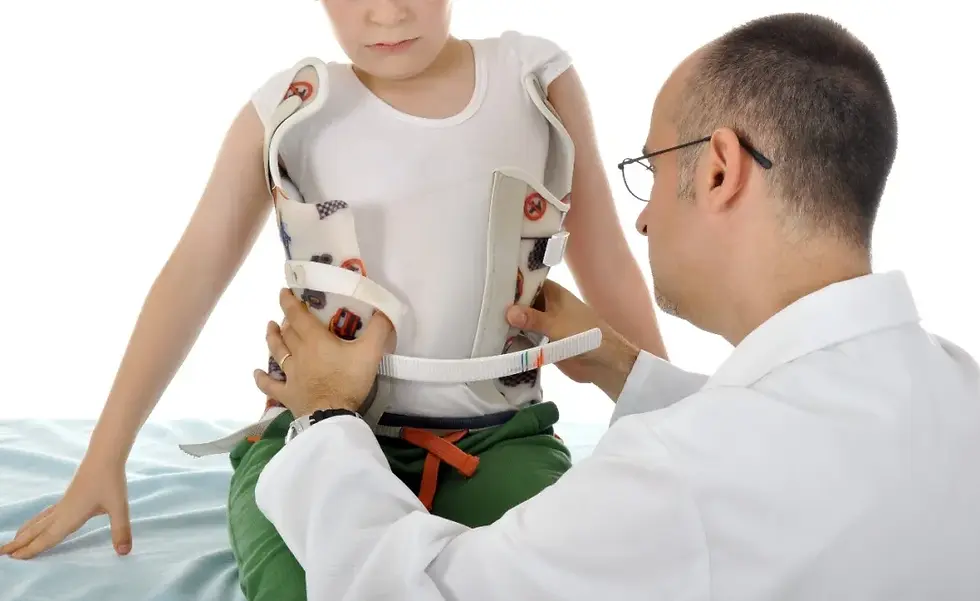
Good spinal alignment shapes both appearance and physical health. Do not let temporary comfort ruin children’s posture and confidence. Parents should monitor kids’ body posture, and teenagers should reject bad sitting habits. Stand tall and protect spinal health!


Comments