1.5-Hour Rapid Heart Transplant! Dr. Zhao Haige's Team at Zhejiang University Sir Run Run Shaw Hospital Restarts Life for a 60-Year-Old Grandmother

Updated: 5 days ago
When doctors first mentioned a "heart transplant," Grandmother Li instinctively recoiled: "A heart can be transplanted? Can I withstand such a risk?"
Recently, Professor Zhao Haige, Director of the Department of Cardiovascular Surgery at Zhejiang University School of Medicine Sir Run Run Shaw Hospital, led a multidisciplinary team (MDT) to successfully perform a heart transplant on Grandmother Li, who was suffering from end-stage hypertrophic cardiomyopathy.
On August 20th, Grandmother Li returned to the hospital for a check-up. Her heart-related indicators showed excellent recovery, and her overall physical condition was stable. From over 20 years of suffering to being able to take care of herself just one month after surgery, the SRRSH team used cutting-edge technology and compassionate care to restart life for this elderly patient with severe heart failure.
A Heartbeat That Gradually Weakened, Igniting a Final Ray of Hope in Despair
Grandmother Li is 65 years old. She first experienced chest tightness and shortness of breath over 20 years ago. Initially, she thought rest would help and delayed seeking medical attention. As she aged, her heart function continued to decline. A decade ago, the sudden death of a family member from a heart attack finally served as a wake-up call.
In 2016, Grandmother Li came to SRRSH for treatment and was diagnosed with hypertrophic cardiomyopathy, interventricular septal thickening, and left ventricular dysfunction. Genetic testing revealed a pathogenic gene mutation, indicating a risk of malignant arrhythmia and sudden death at any time.
At that time, the team implanted an ICD (Implantable Cardioverter-Defibrillator) for her and prescribed long-term standardized medication. However, the myocardial damage was irreversible, her heart function declined year by year, and the disease continued to erode her life silently. Before the surgery, Grandmother Li could barely walk a few steps without gasping for air, required hospitalization every few months for treatment, and her ejection fraction (EF) was below 30% (the normal range for adults is 50-70%).
End-stage heart failure had completely confined her.
When doctors first mentioned a "heart transplant," Grandmother Li instinctively recoiled: "A heart can be transplanted? Can I withstand such a risk?" It was the medical team, who repeatedly visited her bedside, explaining the surgical procedure in simple terms and dispelling fears with past successful cases. It was also the constant companionship and gentle encouragement from her family that finally gave her the courage to sign the transplant registration form solemnly.
In July of this year, after a three-month wait, the news of a matching donor heart arrived as expected—that ray of light had indeed shone through.
1.5-Hour Ultra-Fast Anastomosis, The Stopped Heart Begins to Beat Anew
Every second of ischemia after the donor heart is removed from the body can damage the heart muscle, making meticulous preparation beforehand crucial.
Director Zhao Haige immediately organized an MDT consultation. Experts from the Department of Cardiovascular Surgery, Critical Care Medicine, Cardiology, Anesthesiology, Ultrasound Medicine, Laboratory Medicine, Blood Transfusion, OPO (Organ Procurement Organization) coordinators, and Clinical Nutrition gathered to discuss and dismantle the multiple surgical challenges: advanced age, hypertrophic cardiomyopathy, pre-existing ICD, and potential pulmonary hypertension. They tailored a personalized treatment plan.
On the afternoon of July 8th, the surgery officially commenced. The team faced three major core technical hurdles: donor heart preservation, vascular anastomosis, and circulation switching. Director Zhao Haige commanded the operation, while Dr. He Fan and Dr. Hong Jianmao performed the donor heart procurement with maximum speed, meticulously minimizing warm and cold ischemia times.
After establishing cardiopulmonary bypass, the team precisely anastomosed critical vessels including the left atrium, aorta, and pulmonary artery. They employed an ultra-fast reperfusion technique to minimize reperfusion injury. From the donor heart's removal to the restoration of blood supply, the entire process took only 1.5 hours.
Minutes after opening the vessels, the new heart began to beat spontaneously and powerfully in Grandmother Li's chest. After 0.5 hours of assisted circulation, the bypass was smoothly weaned off, and the new heart firmly took over the vital task of sustaining life.

Multidisciplinary Collaboration Builds a Strong Safety Net
Transplantation is hailed as the "crown jewel" of surgery, and its luster depends on the countless pairs of hands supporting it behind the scenes.
Dr. Fang Xiao, Associate Chief Physician of Anesthesiology, completed a comprehensive cardiopulmonary function assessment and pre-operative adjustments for the patient's implanted cardiac device. Since the transplanted heart loses its neural regulation and cannot adjust its heart rate quickly, he devised a meticulous medication plan to precisely manage hemodynamics throughout the surgery, creating a stable and safe anesthetic foundation.
Dr. Sun Yaxun, Chief Physician of Cardiology, optimized pre-operative medications for heart failure and arrhythmias. The Clinical Nutrition Department adjusted the nutritional support plan to improve the patient's pre-operative weakness. Head Nurse Huang Xiaoling of the Operating Room led her team in thorough pre-surgical preparations, ensuring the surgery proceeded smoothly.
Teams from Imaging, Laboratory Medicine, Blood Transfusion, and OPO simultaneously completed the entire process of donor-recipient matching, organ transport contingency planning, and intraoperative blood reserve preparation, anticipating risks before the operation.
A successful surgery is merely the starting point of a new life; post-operative care is the critical battlefield determining long-term survival. Dr. Zhang Ge, Chief Physician of Critical Care Medicine, along with Head Nurses Ding Zhuyu and Wu Jialing's nursing team, initiated 24/7 uninterrupted monitoring: closely watching cardiac function, coagulation, heart rhythm, immune rejection, kidney function...
every fluctuation in these indicators was crucial. They accompanied Grandmother Li through three major life-threatening hurdles: graft dysfunction, severe infection, and acute rejection, nipping each crisis in the bud.
The Return of a Heartbeat, The Return of Life
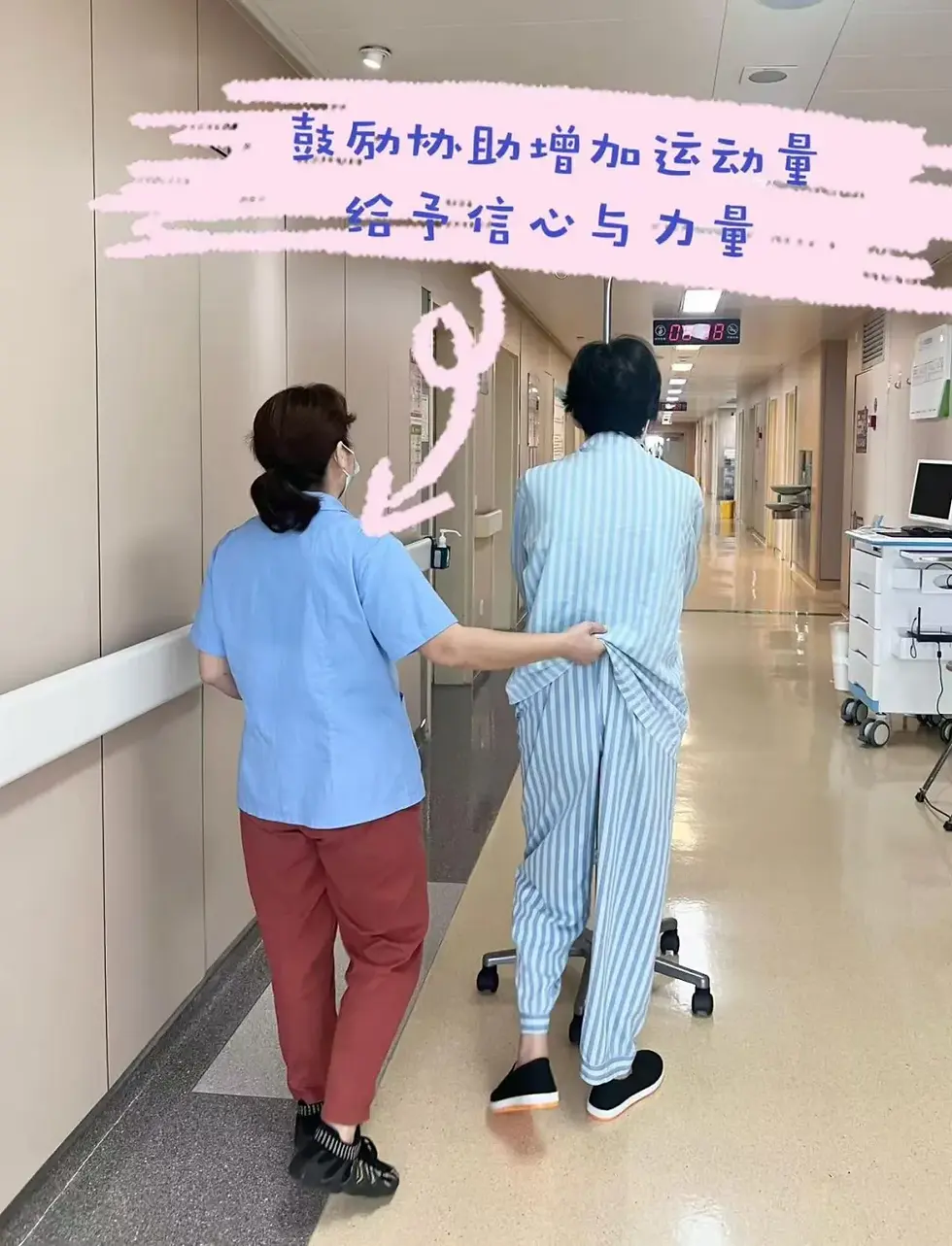
On the second day after surgery, Grandmother Li's endotracheal tube was successfully removed. Her heart rate and blood pressure remained stable throughout. Guided progressively by the medical staff, she began in-bed activities, sitting up, and standing. On day 5 post-surgery, she was transferred from the ICU to a regular transplant ward.
In just one week, she transformed from being unable to move freely before surgery to walking back and forth independently in the corridor. A follow-up echocardiogram showed a significant increase in EF, from below 30% pre-surgery to 69%, with cardiac function returning to the normal range. Two weeks after surgery, all of Grandmother Li's indicators met the criteria, and she was discharged successfully.
A month after the operation, her family sent a recent photo taken at home: Grandmother Li looked energetic and was fully capable of handling her daily activities. In the photo, she stood steadily, with sunlight on her shoulders. The composure that illness had stolen for so long had finally returned. This was not just the restarting of a heart, but a celebration of a life regaining its "everyday" existence.

"Elderly patients with severe heart failure should not be easily consigned to a 'forbidden zone.' Age is just a number; the patient's will to live is the true measure," said Director Zhao Haige. His words capture the unwavering mission behind heart transplant care. Over 20 years of illness had trapped not just a failing heart, but also the hope of an ordinary life.
From precise pre-operative multidisciplinary assessment, to intraoperative efforts to protect the heart muscle, to meticulous post-operative monitoring, the Department of Cardiovascular Surgery at SRRSH, with its mature technical system and patient-centered philosophy, continues to expand the boundaries of life for elderly patients with severe heart disease. They bring the hope of rebirth to countless patients with end-stage heart failure through their exceptional medical skills.
Planning treatment in China?
MedTourChina helps international patients reach hospitals such as leading Chinese hospitals. Send your medical reports and our coordinators will compare specialists, treatment timelines and costs for you — at no charge.


Comments