Black Stool Should Never Be Ignored: Severe Gastrointestinal Bleeding Can Be Life-Threatening

Mr. Zhou had undergone major pancreatic cancer surgery just three months earlier. During postoperative chemotherapy, he suddenly faced a fatal crisis — recurring "black stool" appeared without warning, with blood in his stool. Within just a few days, his hemoglobin — the key component in blood responsible for transporting oxygen — dropped to less than half of normal levels. This meant that all his organs were in a state of severe oxygen deprivation and could fail at any time, putting his life at risk.
However, Mr. Zhou had undergone 2 gastroscopies, 1 colonoscopy, and 2 vascular interventional treatments at other hospitals, yet the source of bleeding was still not found, and he continued to have recurrent bloody stools!
Time Means Life
A week ago, Mr. Zhou was urgently transferred to the Gastroenterology Department of Taikang Xianlin Drum Tower Hospital, where he was received by Dr. Zhang Yiyang's team. At that time, Mr. Zhou was still passing bloody stools repeatedly, and his hemoglobin was progressively decreasing. Based on his medical history and previous examination and treatment records, the bleeding was suspected to be in the small intestine.
At this point, Mr. Zhou had been experiencing gastrointestinal bleeding for over 10 days. Accurately identifying the source of bleeding and stopping it as quickly as possible was the top priority! After multiple blood transfusions and conservative drug treatments, Dr. Zhang Yiyang's team prepared to perform an "emergency peroral small bowel endoscopy" for Mr. Zhou — a highly challenging undertaking.
The small intestine is approximately 5-7 meters long, winding and coiling within the abdominal cavity, making it a "blind spot" for traditional examinations. Small bowel endoscopy can reach deep into the small intestine where ordinary gastroscopy and colonoscopy cannot, allowing observation of lesions while performing biopsies, polyp removal, and treatment of local lesions.

However, the small intestinal wall is very thin and highly mobile, and navigating the endoscope through multiple narrow and tortuous intestinal walls is technically demanding — especially since Mr. Zhou had recently undergone pancreatic surgery and was still in a period of active bleeding with unstable vital signs.
A "Minimally Invasive" Victory in a Desperate Situation
Under strict vital sign monitoring, Dr. Zhang Yiyang's team rose to the challenge and performed emergency small bowel endoscopy for Mr. Zhou.
The endoscope advanced with difficulty through the deep small intestine, and finally, at the pancreaticoenteric anastomosis — the site where the pancreas and intestine were connected during the previous pancreatic cancer surgery — a bleeding blood vessel was discovered!
The bleeding point was deep in the small intestine after gastrointestinal rerouting surgery, a location that gastroscopy, colonoscopy, and other examinations could not reach. It was the "invisible killer" that had caused all previous examinations to "miss their target."
At that moment, Mr. Zhou's intestinal cavity was bleeding heavily, the visual field was unclear, and his blood pressure dropped again — the situation became critical! Should they immediately transfer to surgery for an open laparotomy, or continue with endoscopic hemostatic treatment? The dilemma presented itself once again.
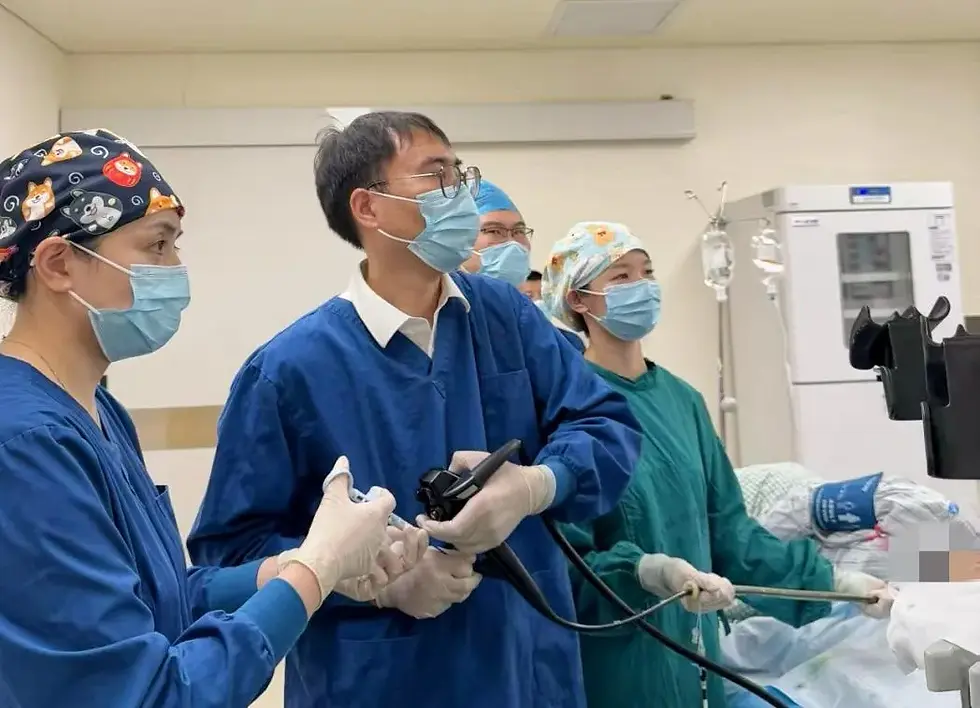
With rich experience and superb technique, Dr. Zhang Yiyang's team remained calm and composed. Under direct endoscopic visualization, they finally located the bleeding vessel and performed precise hemostatic treatment on the bleeding point.
Ultimately, the bleeding was successfully stopped. A life-and-death struggle lasting nearly two weeks was won through minimally invasive endoscopic surgery. Everyone finally breathed a sigh of relief, and their anxious hearts were finally put at ease.
After surgery, Mr. Zhou's vital signs quickly returned to normal, his hemoglobin steadily recovered, and he was soon able to start eating. He was successfully discharged and is now in recovery.
Recognizing Gastrointestinal Bleeding: The Body Is Sending a Dangerous Alarm
Gastrointestinal bleeding is a common acute and critical condition in internal medicine. It is not an independent disease but a serious manifestation caused by multiple diseases — for example, gastrointestinal ulcers, drug-induced injury, esophageal and gastric varices, gastrointestinal tumors, hemorrhoids, or anal fissures can all cause gastrointestinal bleeding.
In fact, the gastrointestinal tract is a long passage extending from the oral cavity to the anus, including the esophagus, stomach, small intestine, and large intestine. It is responsible for food breakdown, nutrient absorption, and waste excretion. Once a part of the gastrointestinal tract ruptures or bleeds, we need to detect it promptly and seek medical treatment as early as possible. Generally speaking, the following three situations are signals of gastrointestinal bleeding and require special attention.
● Hematemesis: Vomiting bright red or coffee-ground-like blood.
● Black stool: Passing tarry, sticky, shiny black stool — a typical manifestation of upper gastrointestinal bleeding.
● Bloody stool: Passing dark red or bright red bloody stool, more commonly seen in lower gastrointestinal bleeding or acute massive upper gastrointestinal bleeding.
Gastrointestinal bleeding may also be accompanied by: palpitations, dizziness, darkening of vision, cold sweats, fatigue, shortness of breath, and even syncope. These often indicate that the bleeding volume is already large and the body can no longer compensate.
However, sometimes eating too much duck blood, pork liver, or certain iron supplements can also turn stool black, but it is usually not shiny or sticky and disappears after stopping the medication or food.
Gastrointestinal bleeding is dangerous because it has two characteristics: "slow" and "acute." If it is chronic occult bleeding, it is not easily noticed, but long-term bleeding can lead to severe anemia, systemic organ hypoxia, and heart failure. Acute massive bleeding can lead to circulatory failure and shock within a short period, endangering life.
Dr. Zhang Yiyang also particularly reminds that many cases of gastrointestinal bleeding occur intermittently, and sometimes symptoms briefly disappear. Do not mistakenly assume that everything is fine. The spontaneous stopping of bleeding may only be temporary. If the underlying problem is not resolved, bleeding may recur at any time or even develop into massive bleeding. Therefore, everyone must take the above symptoms seriously.
24-Hour Gastrointestinal Bleeding Emergency Response System
Taikang Xianlin Drum Tower Hospital relies on the Provincial Key Clinical Specialty of Gastroenterology and the Nanjing Municipal Key Medical Specialty of Emergency Medicine to build a 24-hour gastrointestinal bleeding emergency response system. The hospital is equipped with high-end endoscopic equipment and can rapidly carry out emergency endoscopic hemostasis, interventional procedures, and surgical operations. It particularly excels in handling critical cases such as variceal rupture and unexplained small intestinal bleeding, achieving a full-process green channel from emergency assessment to multidisciplinary collaborative treatment.
The case of Mr. Zhou is a testament to the efficient operation of this system. On the one hand, the hospital has established a multidisciplinary team (MDT) work model integrating gastroenterology, general surgery, anesthesiology and surgery, emergency medicine, and critical care medicine. When encountering difficult cases, every key decision point can be based on joint assessment by multidisciplinary experts to provide the most suitable treatment plan for the patient.
On the other hand, this surgery was led by Dr. Zhang Yiyang of the Gastroenterology Department, applying the highly difficult peroral small bowel endoscopy technique to precisely locate and treat the bleeding point in a hidden corner of the gastrointestinal tract. Timely treatment also avoided a second open laparotomy with greater trauma.
The team of Dr. Zhang Yiyang in the Gastroenterology Department of Taikang Xianlin Drum Tower Hospital specializes in small bowel endoscopy examination and treatment, including small intestinal bleeding, small intestinal ulcers, small intestinal diverticula, small intestinal polyps, small intestinal tumors, and small intestinal strictures. For small intestinal diseases, the department has formed an integrated treatment model covering diagnosis, classification, treatment, and postoperative rehabilitation, completing more than 600 small bowel endoscopies annually, which is in a leading position in China.


Comments