Delegation from Sir Run Run Shaw Hospital Visits Kazakhstan and Kyrgyzstan

Updated: 4 days ago
A delegation from Sir Run Run Shaw Hospital travelled to Kazakhstan and Kyrgyzstan under the Belt and Road framework. Experts delivered live minimally‑in‑surgery demonstrations, keynote lectures and signed MOU for long‑term medical‑education & clinical collaboration.
This year marks the 25th anniversary of the founding of the Shanghai Cooperation Organization. At the end of August, President Xi Jinping travelled to Kyrgyzstan for the SCO Summit and paid a state visit to Kyrgyzstan, injecting strong momentum into pragmatic health‑sector cooperation between China and Central Asian countries.
Against the backdrop of the Belt and Road Initiative and the building of a Global Community of Health for All, Sir Run Run Shaw Hospital (SRRSH), Zhejiang University School of Medicine, is actively advancing “medical‑capacity‑building overseas” and contributing to the “Health Silk Road”.
From August 23 to 30, an expert delegation specializing in minimally‑invasive medicine from SRRSH was invited to visit the University Medical Center (UMC) of Nazarbayev University in Kazakhstan and the International Higher School of Medicine (IHSM) in Kyrgyzstan. The experts delivered multiple live demonstrations of minimally‑invasive surgeries, conducted consultations on complex cases, and gave academic lectures.
Memoranda of Understanding (MOU) were separately signed with Astana Medical University (AMU) of Kazakhstan and the International Higher School of Medicine (IHSM) of Kyrgyzstan.
Meanwhile, the delegation from SRRSH Aral Hospital — the first national regional medical center in the Xinjiang Production and Construction Corps — visited Osh State University, the International Higher School of Medicine and its affiliated hospital in Kyrgyzstan.
As early as January of this year, a four-member delegation led by the president of the Kyrgyzstan International Medical University has visited SRRSH. Academician Cai Xiujun, President of SRRSH, Yu Hong, Executive Deputy Party Secretary, and other professors held in‑depth, friendly exchanges with Kyrgyz counterparts, laying solid groundwork for this Central‑Asia tour by the SRRSH expert team.
From the banks of the Qiantang River to the heart of Central Asia, SRRSH experts leveraged superb clinical skills, innovative technologies and modern hospital‑management expertise as bridges. Distinctive “SRRSH experience” crossed mountains and seas to reach the world, opening a new chapter for China’s international medical cooperation across the Eurasian continent.

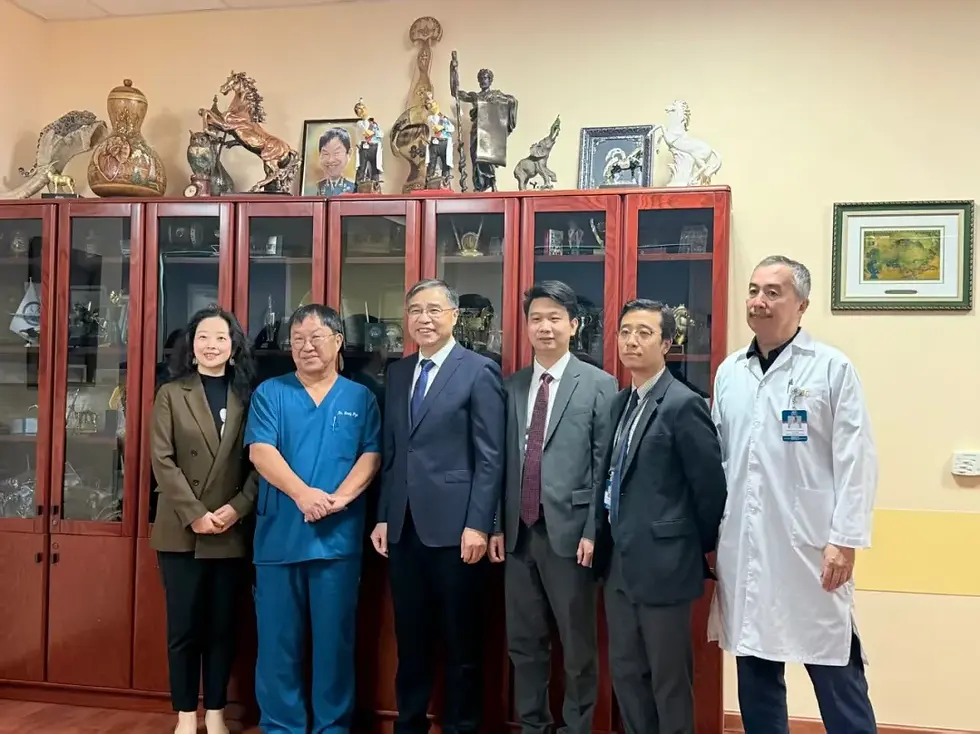


The University Medical Center (UMC) under Nazarbayev University is Kazakhstan’s first JCI‑accredited academic medical center, affiliated with Nazarbayev University.

Astana Medical University (AMU) ranks among Kazakhstan’s largest public medical universities, holding 2nd place nationwide for medical higher education. Its pharmacy program ranks No. 1 in the country, while clinical medicine and public health rank No. 2.

Founded in 2003, International Higher School of Medicine (IHSM) in Kyrgyzstan is well‑known for high‑level international education, ranking first in Kyrgyzstan’s 2024 Science Citation Index and 2025 medical‑discipline assessments.

Osh State University of Kyrgyzstan is one of the country’s largest and oldest comprehensive national universities and a key higher‑education hub in Central Asia.

A Long Journey: Charting Cooperation through Joint Consultation and Co‑construction
During the visit, SRRSH formally signed Memoranda of Understanding (MOU) with Astana Medical University (AMU) in Kazakhstan and the International Higher School of Medicine (IHSM) in Kyrgyzstan. Both sides agreed to deepen collaboration in healthcare delivery, medical education, scientific research and innovative development, promote academic exchanges, joint talent training and collaborative technological innovation, and jointly plan for an international joint diagnosis‑and‑treatment center.


Building on SRRSH’s strengths in minimally‑invasive medicine, telemedicine and refined hospital management, the partners plan to roll out regular remote MDT consultations, reciprocal expert visits and standardized clinical‑training programmes to cultivate a local high‑calibre medical workforce “that cannot be taken away”.
This means advanced Chinese clinical norms and innovative technologies will benefit Central Asian communities more sustainably and profoundly. It also marks a shift from one‑way technology transfer toward two‑way scientific collaboration, joint talent development and co‑built platforms.
Medical Bridge over the Silk Road: A New Medical Journey via Academic Exchange
While visiting medical institutions in the two Central‑Asian nations, the SRRSH delegation was invited to take part in the “Master Class” academic series hosted by UMC (Nazarbayev University) and IHSM (Bishkek, Kyrgyzstan). Dr. Ding Guoqing, Vice‑President of Sir Run Run Shaw Hospital and Chief Physician of the Department of Urology; Dr.
Li Zheyong, Assistant Dean of the Shaoxing Campus and Chief Physician of the Department of General Surgery; Dr. Dai Sheng, Chief of the Medical Affairs Department and Chief Physician of the Department of Anorectal Surgery; Professor Fu Guosheng, Director of the Department of Cardiology; Dr. Jiang Chenyang, Deputy Director of the Department of Cardiology; and Ms.
Zhan Yilei, Director of the International Cooperation Office, delivered keynote speeches respectively.


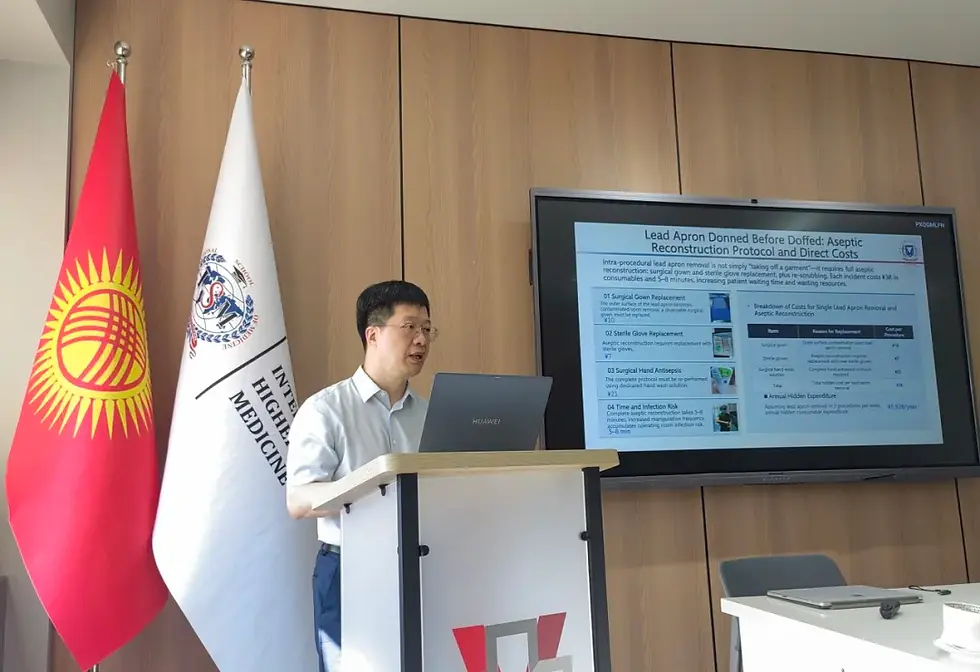


Technology Goes Global: SRRSH Expertise Empowers Live Surgical Demonstrations
Urological Minimally‑invasive Surgery: Precise Resection of a 6.5‑cm Renal Tumour
On August 25 at UMC Nazarbayev University in Kazakhstan, Dr. Ding Guoqing, Vice‑President of SRRSH, performed a laparoscopic radical nephrectomy on a 66‑year‑old female patient. Pre‑operative CT identified a 6.0 × 6.5 cm heterogeneous left‑renal mass closely adhered to the spleen, with suspected renal‑pelvis‑calyceal invasion and enlarged perihilar lymph nodes.
After discussion with local surgeons, Dr. Ding completed radical nephrectomy plus regional lymph‑node dissection within one hour. The procedure proceeded smoothly with minimal blood loss, demonstrating China’s mature, sophisticated expertise in minimally‑invasive management of complex renal tumours.
Observing local doctors commented: “It is incredible that such complex surgery can be completed in such a short time. We highly admire Dr. Ding’s rigorous clinical judgement and superb surgical technique.”
The patient recovered well with stable post‑operative vital signs. Dr. Ding Guoqing brings extensive experience in laparoscopic and robotic urological procedures. This live surgical demonstration offered a vivid showcase of his expertise and China’s advanced minimally‑in‑urology capabilities.


General‑surgery Minimally‑invasive Procedures: On‑site Guidance for Liver Haemangioma Surgery
Shortly afterwards in the operating‑theatre of UMC Nazarbayev University, Dr. Li Zheyong, Assistant Dean of SRRSH Shaoxing Campus (General Surgery), gave live demonstration and hands‑on guidance for high‑difficult‑weight‑loss bariatric surgery and liver‑haemangioma resection.
Months prior to this Central‑Asia mission, while attending an international medical exhibition in Belarus, Dr. Li Zheyong (from Academician Cai Xiujun’s team) had led a cross‑border remote‑robot‑assisted operation. Using domestic surgical‑robot hardware and 5G connectivity, he operated on a high‑risk liver‑haemangioma patient 6 000 km away in Aral, Xinjiang.
That case — “surgeon in Belarus, patient in Xinjiang” — stands as a landmark example of domestic high‑end medical equipment and digital‑communication‑technology “going global”. His on‑site surgical mentorship in Kazakhstan once‑again brought “Chinese clinical experience” to Central‑Asian front‑line practice.
Local surgeons praised his profound knowledge of liver anatomy and decisive, precise intra‑operative judgements.

Feedback from Kazakh specialists
Professor Gani Kuttymuratov
Dr. Dauren Mustafinov
Dr. Dimash Tulegenov
Cardiac Intervention: Swift, Precise Opening of “Life‑saving Vascular Channels”
On August 28 at Vedanta Hospital (affiliated with IHSM, Bishkek, Kyrgyzstan), Professor Fu Guosheng, Chief of Cardiology at SRRSH — a leading Chinese expert in coronary‑heart‑disease, arrhythmia, heart‑failure and valvular‑disease interventions — completed multiple high‑complexity percutaneous coronary intervention (PCI) cases.
One circumflex‑artery lesion was treated with a drug‑coated balloon (DCB), realising the advanced “leave‑nothing‑behind” interventional concept. These complex‑coronary‑intervention procedures filled several local technical gaps and delivered international‑standard care to Kyrgyz patients.
Professor Fu Guosheng successfully opened two chronic total‑occlusion (CTO) lesions within less than one hour. Applause and admiration echoed in the operating‑theatre. Local Kyrgyz physicians remarked: “The efficiency and success rate of these procedures are admirable. Professor Fu’s dexterous coronary‑interventional manoeuvres look almost magical, showing us the top‑tier standard of Chinese interventional cardiology.”
Post‑surgery, Professor Fu gave interviews to local media, sharing China’s experience and technical achievements in complex coronary‑interventional therapy. He also visited ward patients to explain post‑operative rehabilitation instructions. One patient shook Professor Fu’s hand repeatedly and said emotionally: “Thank you, Chinese expert, for giving me a second chance at life. I once thought I would have to travel abroad for treatment, yet I received world‑class care right at home.”

Dr. Jiang Chenyang, Deputy Chief of Cardiology at SRRSH, provided detailed diagnostic work‑up and tailored treatment planning for a 26‑year‑old patient with paroxysmal atrial fibrillation and chest pain in outpatient clinics. He also gave hands‑on procedural guidance for trans‑oesophageal echocardiography for a 57‑year‑old patient with persistent atrial fibrillation. Dr. Jiang specialises in arrhythmia and cardiomyopathy management and excels in catheter ablation for complex arrhythmias.
Given the high local prevalence of coronary‑artery‑disease and arrhythmias such as atrial fibrillation in Central Asia, SRRSH Cardiology and IHSM Cardiology reached preliminary‑cooperation intentions during this exchange. Plans are underway to further transfer mature Chinese cardiology techniques and clinical experience to Kyrgyzstan for the benefit of more patients.

Feedback from Kyrgyz medical experts
Dr. Chakiev Aibek
Dr. Chyngyz Maksutov
This “medical‑going‑global” mission coincides with a key period for China‑Central‑Asia community‑building. It constitutes a vivid example of Zhejiang‑medical‑sector implementation of high‑quality Belt‑and‑Road development initiatives. As a benchmark hospital for Chinese‑style modernisation, SRRSH contributes concretely to regional medical progress.
During this important diplomatic moment when President Xi Jinping attended the SCO Summit to shape the organisation’s future, SRRSH advanced surgical demonstrations, complex‑case reviews, academic exchanges and cooperation‑agreement signing. These activities consolidate traditional China‑Kazakhstan and China‑Kyrgyzstan friendship and contribute “SRRSH wisdom” and “Zhejiang strength” toward building a closer Global Community of Health for All.
Going forward, building on this Central‑Asia tour as a new starting‑point, SRRSH will keep deep‑ening pragmatic partnerships with Central‑Asian nations, bringing Chinese‑medical‑solutions to broader Central‑Asian populations and writing inspiring new chapters on the journey toward a Global Community of Health for All.
Planning treatment in China?
MedTourChina helps international patients reach hospitals such as leading Chinese hospitals. Send your medical reports and our coordinators will compare specialists, treatment timelines and costs for you — at no charge.


Comments