Chief Doctor Wang Wei Performs Complex Combined Carotid Endarterectomy + STA–MCA Bypass, Restoring Blood Flow to the “Parched Brain” of a Moyamoya Disease Patient


When the 63‑year‑old patient Mr Wang first fell ill, he felt as if he had drunk too much alcohol. His body went weak and unsteady, and his gaze became fixed and vacant. Within just five months, he suffered two consecutive cerebral infarctions, followed by slurred speech, memory loss, and limb weakness.
He sought medical care at many hospitals with no success and was even told he would have to wait six months for surgery. Finally, at Shanghai Donglei Brain Hospital, a highly complex combined procedure—carotid endarterectomy plus superficial temporal artery–middle cerebral artery (STA–MCA) bypass—successfully “restored vital blood flow” to his oxygen‑starved brain.
Two Cerebral Infarctions in Five Months
Wang’s nightmare began five months ago. During his first attack, that “drunken feeling” instantly robbed him of control over his body. He was diagnosed with cerebral infarction, moyamoya disease, and vertebral artery stenosis.
At first, he received conservative treatment, and his symptoms improved temporarily—but only for two months. Then a second stroke struck, with imaging showing new infarct lesions.
To save his failing health, he underwent vertebral artery stenting at a local hospital. Yet after the operation, his memory showed no obvious improvement. He remained slow to respond, and even simple daily conversation became difficult.
The “Moyamoya” Cloud in the Brain
In the clinic of Chief Neurosurgeon Dr. Wang Wei at Shanghai Donglei Brain Hospital, a detailed cerebral angiography report revealed the true nature of Wang’s condition: severe proximal stenosis and distal occlusion of the carotid artery. Instead of clear arterial terminals, a tangled mass of tiny, hairlike vessels—resembling puffs of smoke—had formed at the base of the brain.
“This is moyamoya disease, a chronic progressive occlusive cerebrovascular disorder,” Dr. Wang explained. “When the main arteries of the brain become blocked, the body attempts to compensate by growing many fragile abnormal small vessels. On angiography, these vessels look like smoke. This is not just a simple blockage; it is an extremely complex case where the body’s compensatory mechanism is on the verge of collapse.”
This compensation is highly unstable. The “moyamoya vessels” supply blood inefficiently and unreliably, making them the root cause of cerebral infarction and intracranial hemorrhage. Combined with Wang’s severe carotid stenosis, his brain was in a state of severe “starvation.”
This also explained his memory loss. Memory relies on deep brain structures. The two infarctions caused local brain cell death, and chronic insufficient blood supply left surviving neurons too energy‑deprived to function normally.
Unblocking the “Main Artery” and Building a “Highway Bypass”
Facing Wang’s complicated condition, Dr. Wang outlined the surgical plan:
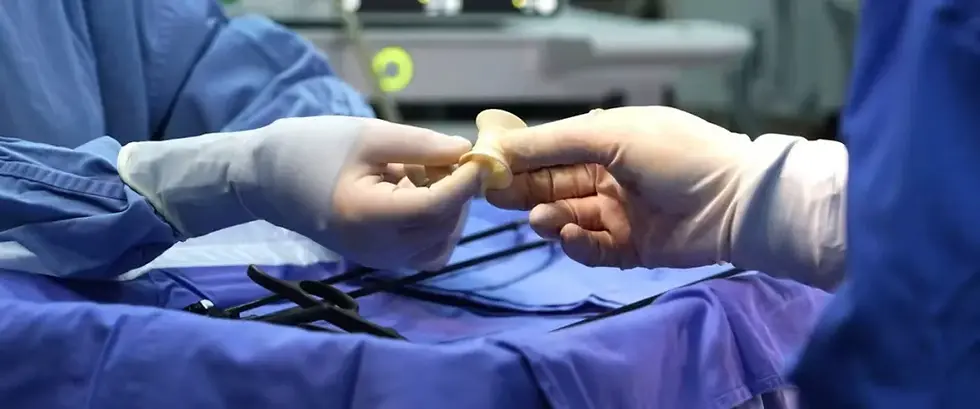
“Proximal carotid stenosis has severely impaired cerebrovascular regulation and drastically reduced blood flow. The operation must both open the proximal vessels and perform a distal bypass to restore intracranial perfusion. We need a two‑pronged strategy: carotid endarterectomy (CEA) plus extracranial–intracranial (EC–IC) bypass.
The proximal stenosis is a problem with the ‘main highway.’ We first clean out the plaque with endarterectomy to restore pressure in the main channel. Then we perform a bypass, diverting a strong extracranial artery directly to the ischemic area inside the skull to create a new ‘blood supply highway.’ One surgery resolves two critical problems.”
After the successful operation, follow‑up imaging confirmed patent vessels and markedly improved blood flow in the ischemic brain regions. Two weeks after surgery, Wang was discharged in stable condition. His eyes were clear, and his speech had returned to normal.
“Moyamoya disease and atherosclerotic stenosis do not develop overnight,” Dr. Wang warned. “At age 63, vascular changes likely began more than a decade ago.”
Transient dizziness, brief blackouts, occasional limb numbness, or fleeting speech difficulties—symptoms that may last only minutes—are often mistaken for low blood sugar, cervical spondylosis, or simple fatigue.
For middle‑aged and elderly people with hypertension, diabetes, or a history of smoking, a routine neck ultrasound is not sufficient for screening. More comprehensive cerebrovascular evaluation, such as MRA (magnetic resonance angiography) or CTA (computed tomographic angiography), is recommended. Early detection and early intervention are key to preventing catastrophic “brain failure.”


Comments