Progress in Minimally Invasive Cardiovascular Surgery in China

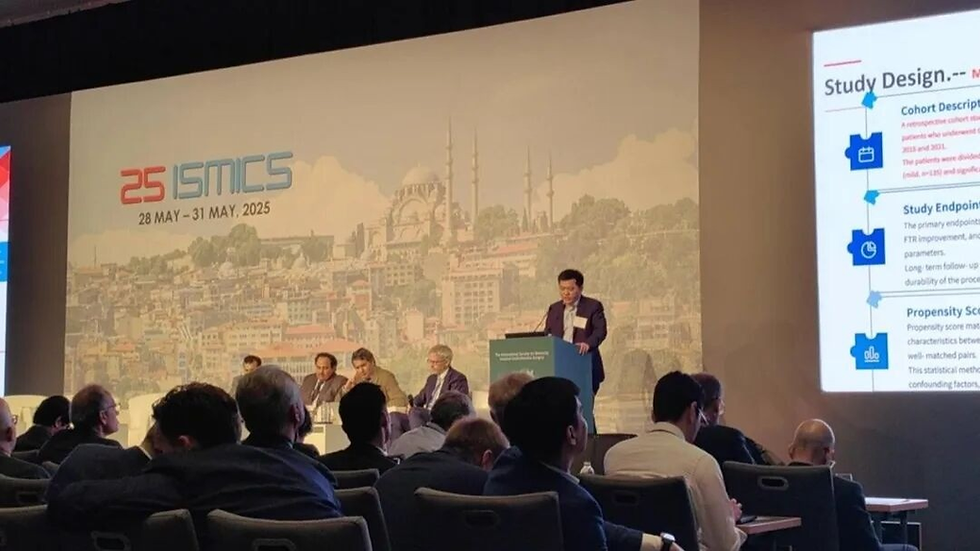
Abstract & Introduction
Minimally Invasive Cardiovascular Surgery (MICS) is one of the fastest-developing subspecialties in cardiovascular surgery. Due to less trauma, fewer complications, and faster recovery, MICS is a key development direction. The China National Minimally Invasive Cardiovascular Surgery Professional Committee (CMICS) promotes aligning domestic techniques with international standards. The goal is to summarize MICS progress in China, its clinical effects, and future trends.
Background and Current Status
MICS began in the late 20th century, with the first minimally invasive Coronary Artery Bypass Grafting (CABG) in 1995. MICS is now systematic and routine in key centers. China has a large number of patients needing cardiovascular surgery. In 2023, the total number of cardiovascular surgeries was 341,804, an increase of 29.8% year-over-year. Minimally invasive procedures now account for almost 30%. Compared to traditional open-chest surgery, MICS offers smaller trauma, fewer complications, and faster recovery. However, MICS faces challenges, including high technical difficulty, a long learning curve, and high equipment costs.
1. Major Technical Progress in MICS in China
1.1 Minimally Invasive Valvular Heart Surgery
MICS has achieved significant results in treating aortic, mitral, and tricuspid valve diseases. Minimally invasive mitral valve repair is the preferred surgical method for degenerative mitral regurgitation. Interventional procedures like Transcatheter Aortic Valve Replacement (TAVR) are widely adopted, extending to intermediate- and low-risk patients. Transcatheter Edge-to-Edge Mitral Valve Repair (TEER) is also safe and feasible for high-risk groups.
1.2 Minimally Invasive Atrial Fibrillation (AF) Surgery
AF is a common arrhythmia that can lead to stroke. Minimally invasive epicardial radiofrequency ablation is superior in maintaining sinus rhythm. Notably, the Mei Mini Maze procedure, pioneered by Chinese experts and using a unilateral left thoracotomy, reduces surgical trauma and increases success rates for AF ablation. The "Hybrid" ablation technique, combining epicardial and endocardial ablation, has the highest success rate for complex AF. LAA (Left Atrial Appendage) closure reduces stroke risk and is often recommended, providing an option for patients who cannot take long-term anticoagulants. Synchronous AF ablation is recommended when performing surgery for valvular disease combined with AF, as it improves survival rates and reduces thrombosis risk.
1.3 Minimally Invasive Coronary Artery Bypass Grafting (CABG)
Minimally invasive CABG, combining off-pump surgery and small incisions, has similar survival rates to traditional surgery but offers less trauma, less transfusion, and lower costs. Advancements include robotic-assisted CABG. Traditional open surgery remains the choice for complex multi-vessel disease or synchronous cardiac procedures.
1.4 Minimally Invasive Congenital Heart Disease (CHD) Surgery
Minimally invasive Ventricular Septal Defect (VSD) repair via a small axillary incision is widely used. Interventional procedures for CHD (like ASD, VSD, PDA) have progressed significantly. The development of biodegradable occluder devices shows great promise due to their biocompatibility and reduced long-term complications.
1.5 Minimally Invasive Hypertrophic Obstructive Cardiomyopathy (HOCM) Surgery
The modified Morrow procedure combined with edge-to-edge mitral valve repair performed via a minimally invasive right thoracotomy reduces trauma while maintaining efficacy. The Transapical Off-Pump Septal Myectomy (TA-BSM) is a new, feasible treatment option for HOCM.
1.6 Minimally Invasive Aortic Surgery
Aortic diseases are a serious threat. Endovascular Aortic Repair (EVAR) and minimally invasive small-incision surgery offer new choices. Minimally invasive small-incision surgery through partial sternotomy is used for complex procedures like aortic root reconstruction.
2. Current Limitations and Challenges in MICS
MICS faces several challenges:
· Technical and equipment limitations: High precision is required, and advanced equipment is expensive.
· Patient factors: Not all patients are suitable for minimally invasive treatment.
· Surgical experience: New techniques require systematic training, and lack of experience increases risk.
· Conversion risk: Procedures may need to be converted to traditional open surgery due to complexity.
3. Outlook
MICS has broad prospects and will enhance patient quality of life. It is expected to become the mainstream of cardiovascular surgery. China must strengthen innovation, international exchange, data support, and policy guidance. The future involves further technical fusion and multidisciplinary collaboration to provide more precise and personalized treatment.
Citation Format for this article: Mei J, Jiang ZL, Wang C. Progress in Minimally Invasive Cardiovascular Surgery in China [J]. Chinese Journal of Cardiovascular Research, 2025, 23(4): 289-292.
#medtourchina #healthcareinchina #MICS #DRMEIJU #CHINAHOSPITAL #MinimalInvasive #DOCTORTOURCHINA #CardiovascularSurgery


Comments