Scar-Free Breakthrough | Foshan Fosun Chancheng Hospital Enters the Robotic “Scarless Era” of Thyroid Cancer Treatment

Ms. Li, aged 30, recently received shocking news during her physical examination: she was found to have a Class 5 thyroid nodule. Further tests confirmed a diagnosis of papillary thyroid carcinoma.
Adding to her anxiety, as a young woman who cared deeply about her appearance and having a keloid-prone constitution, she could not accept a long neck scar left by conventional open thyroid surgery. She feared hypertrophic scars that would permanently alter her look.
Fortunately, after thorough evaluation by the Thyroid and Vascular Surgery Department at Foshan Fosun Chancheng Hospital (Foshan Chanyi), Director Du Guoneng recommended a treatment plan that balances therapeutic efficacy and cosmetic outcomes: Da Vinci robotic-assisted thyroid surgery.
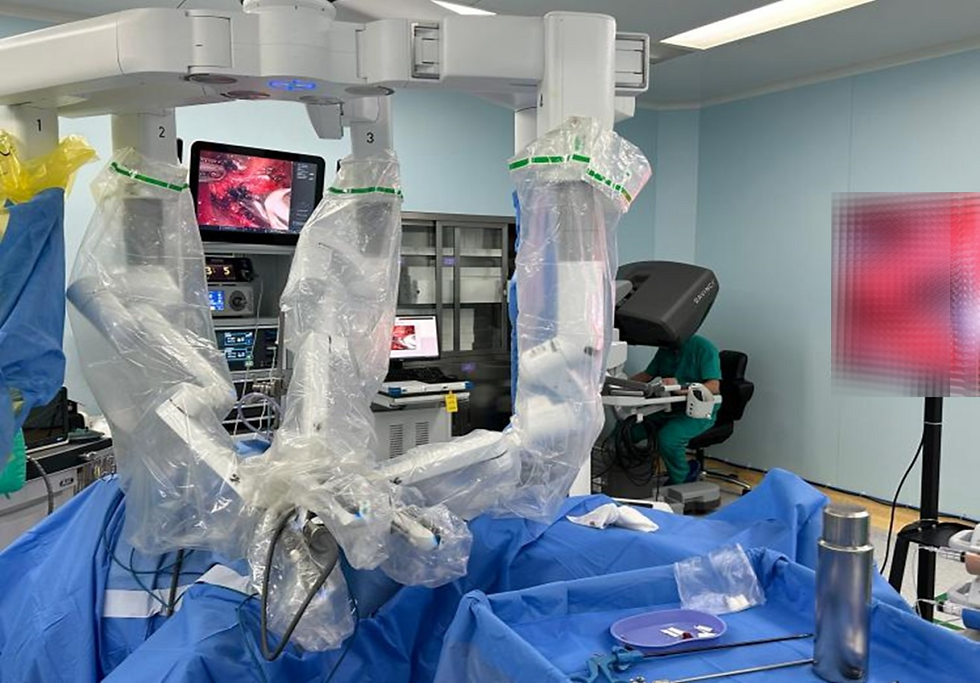
The Da Vinci Surgical System is a mature minimally invasive surgical platform. It precisely translates the surgeon’s hand movements into motions of the internal instruments, with the surgeon controlling the entire procedure from the console. The surgery follows four main stages:
Creation of a subcutaneous working space
Docking and positioning of robotic arms
Resection of the lesion under high-definition visualization
Preservation of vital anatomical structures and retrieval of the surgical specimen

The procedure lasted approximately three hours with minimal intraoperative blood loss. When Ms. Li woke up after surgery, there was no neck incision or drainage tube. Only a small dressing was placed under her right armpit, truly achieving a scar-free neck after treatment.
With robotic assistance, surgical movements are precise and controllable. The robotic arms maneuver flexibly within the confined neck space to completely remove the lesion and perform standardized lymph node dissection, while preserving the recurrent laryngeal nerve and parathyroid function as much as possible. Patients can receive curative treatment without compromising neck aesthetics.
Why Choose Da Vinci Robotic Surgery?
The thyroid gland sits within the narrow anatomical space of the neck, surrounded by the recurrent laryngeal nerve, superior laryngeal nerve, parathyroid glands and major blood vessels. Resecting the tumor while safeguarding these delicate structures demands extreme surgical precision.
Compared with conventional open surgery and standard laparoscopic surgery, Da Vinci robotic surgery offers three core advantages:
High-definition 3D visualization for clear identification of tiny structures The system delivers a 10–15× magnified three-dimensional high-definition view for the operating surgeon, clearly revealing blood vessels and nerves at the millimeter level. This helps surgeons accurately identify anatomical layers and perform ultra-fine dissection.
Dexterous robotic arms for stable, controlled manipulation Robotic arms feature multi-degree-of-freedom movement, rotating flexibly in tight spaces beyond the natural range of human wrists. They automatically filter out hand tremors. During cervical lymph node dissection, they enable refined anatomy, lowering risks of injury to nerves and parathyroid glands, and reducing postoperative complications such as hoarseness and hypocalcemic tetany.
Comprehensive dissection for standardized and rigorous cancer treatment Clinical evidence shows that robotic surgery achieves oncologic completeness comparable to open surgery. For cases with lymph node metastasis, robotic arms can access regions difficult to reach via traditional approaches, enabling more thorough lymph node clearance.
A New Cosmetic Option for Patients Prone to Scarring
For Ms. Li with a keloid tendency, a scarless neck was her top priority. Conventional open thyroid surgery requires a 6–15 cm neck incision, which often results in prominent visible scars. In contrast, Da Vinci robotic thyroid surgery uses tiny 8-millimeter incisions hidden at sites such as the axilla, areola or oral vestibule. Robotic instruments travel through the subcutaneous tunnel to perform the operation, leaving no visible scar on the neck.
The launch of this technology marks a major technical upgrade for minimally invasive thyroid care at Foshan Chanyi Hospital. It brings new treatment options for thyroid patients with cosmetic concerns, proving patients no longer need to choose between health and appearance.


Comments