Gallbladder & Appendix Surgery with Only One Hidden Incision, Scar-Free: Redefining People’s Perception of Operations

When talking about gallbladder or appendix surgery, most patients worry about severe postoperative pain and unsightly abdominal scars. At the General Surgery Department of Sir Run Run Shaw Hospital, Zhejiang University School of Medicine, single-port laparoscopic surgery is changing this stereotype.
Recently, the medical team led by Chief Physician Yan Jiafei and Associate Chief Physician Chen Jiang treated two young women sharing the same ward — one underwent appendectomy, the other cholecystectomy. Their conversation after surgery surprised their families greatly.
The girl who just had single-port laparoscopic appendectomy recovered quickly and said to her roommate: “I barely feel any pain, it’s like I never had surgery at all. How about you?”
The other girl touched her belly in astonishment: “No pain either! I’m even searching for my surgical scar.”
Their families were relieved after hearing this. They originally feared unbearable wound pain and noticeable scars, yet the actual outcome completely overturned their previous understanding of surgery.
Single-Port Minimally Invasive Surgery: One Tiny Incision Is All It Takes
All these benefits come from single-port laparoscopic surgery adopted by our department.
Only a 1–2 cm micro-incision is made around the navel, whose natural folds perfectly conceal the scar, leaving nearly invisible marks and satisfying young patients’ aesthetic demands. This technique greatly reduces abdominal trauma, significantly eases postoperative pain, and most patients can get out of bed the same day without strong painkillers, breaking the old stereotype that surgery always brings agony and prolonged bed rest.
Specializing in minimally invasive surgery, our department keeps advancing laparoscopic techniques from traditional multi-port laparoscopy to single-port laparoscopy, aiming to minimize patient suffering and speed up recovery. Below is a full introduction to this ultimate minimally invasive technique, its strengths and clinical value.
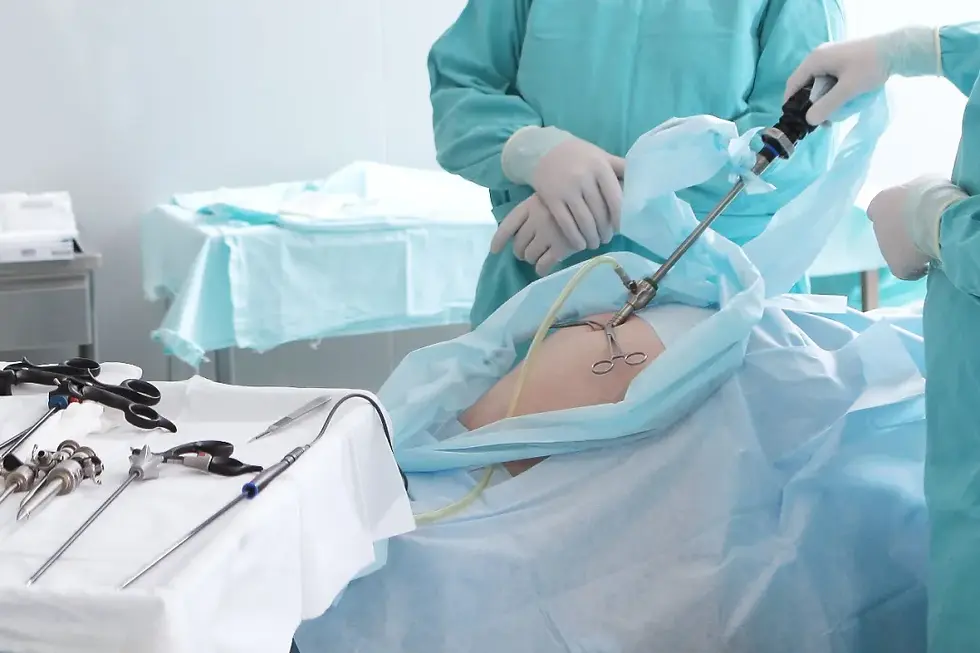
What Is Single-Port Laparoscopic Surgery?
As the name suggests, the procedure only uses one small abdominal cut (1–2 cm around the navel). Laparoscopic instruments and high-definition cameras are inserted into the abdominal cavity to complete cholecystectomy, appendectomy and other procedures under real-time visual guidance.
Compared with conventional multi-port laparoscopy that requires 3–4 separate cuts, single-port laparoscopy further minimizes trauma, pushing minimally invasive treatment to a new level. It balances reliable therapeutic effects with aesthetic outcomes, realizing scar-free treatment.
Core Advantages of Single-Port Laparoscopic Cholecystectomy & Appendectomy
This technique boasts prominent merits, especially for patients prioritizing fast recovery and appearance:
Minimal trauma & mild pain: Only one micro-incision avoids multiple wounds. Postoperative pain is greatly reduced; most patients do not need potent analgesics and can walk around on the surgery day, eliminating prolonged bed rest.
Faster recovery & shorter hospital stay: Less tissue disturbance speeds gastrointestinal recovery. Patients can drink fluids and eat light food 6–8 hours after surgery, and are discharged within 1–2 days. It cuts down time and financial costs compared with traditional operations.
Hidden scar, excellent cosmetic effect: The incision sits around the navel, covered by natural skin creases, leaving almost no visible scar and solving patients’ anxiety about unsightly marks, ideal for young appearance-conscious patients.
Low complication risk & high safety: Our surgeons have rich laparoscopic experience with precise, smooth operations. Clear surgical vision prevents damage to blood vessels and surrounding tissues, leading to extremely low rates of postoperative bleeding, infection and other complications.

Suitable Candidates
Our department has performed this surgery on numerous patients of all ages, ranging from 21 to 72 years old, all achieving smooth recovery and early discharge. However, single-port laparoscopy is not suitable for everyone; doctors will conduct individualized evaluations based on each patient’s condition. Ideal candidates include:
Gallbladder disease patients: gallstones, gallbladder polyps ≥1cm, recurrent chronic cholecystitis, without severe abdominal adhesions or cardiopulmonary dysfunction (final judgment after outpatient consultation).
Appendix disease patients: acute or recurrent chronic appendicitis, without severe perforation, abscess or extensive intra-abdominal adhesions.
Patients who desire concealed scars, rapid recovery and meet physical eligibility criteria for surgery.

Postoperative Recovery Guidelines
Start with small sips of water and liquid food (rice soup, vegetable broth) 6–8 hours after surgery, gradually transitioning to semi-liquid and regular meals. Avoid spicy, greasy and cold food to reduce gastrointestinal burden.
Walk lightly on the surgery day to boost gut function and prevent deep vein thrombosis; avoid strenuous exercise.
Keep the incision clean and dry, do not get it wet, and change dressings as instructed. Seek medical care immediately if redness, swelling, pain or fluid discharge occurs.
Refrain from heavy labor within one month after surgery. Attend regular follow-ups and contact your surgeon promptly for abdominal pain, nausea, fever or other discomfort.


Comments